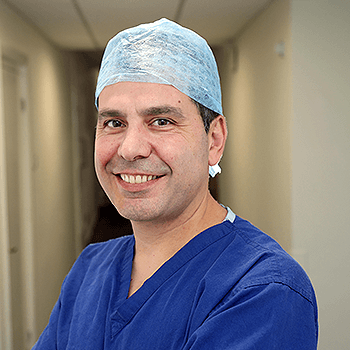
Medically Reviewed By: Mr Panos Papikinos
Uro-dynamics tests are essential diagnostic tools used to evaluate the function of your bladder and urethra, providing key insights into urinary and bladder issues.
A uro-dynamic test is a comprehensive study to find out the reasons for bladder problems including stress and urge incontinence or difficulty passing urine. The exact tests are tailored to look into the type of problems you are experiencing.
These tests are invaluable in managing conditions such as urinary incontinence, difficulty urinating, or bladder dysfunction. It gives your healthcare team the information they need to diagnose your condition and recommend appropriate treatment to relieve your bladder problem.
At Ramsay Health Care UK, we understand that undergoing uro-dynamic tests can be a source of anxiety or embarrassment for many patients. That’s why we prioritise discretion, proficiency, and comfort, ensuring the procedure is carried out by highly experienced consultants in a modern, supportive environment.
Uro-dynamic testing includes a variety of assessments, each designed to measure specific aspects of bladder and urinary function. These tests include:
Uroflowmetry - measures the speed and volume of urine flow to identify possible obstructions or weak bladder muscles.
Cystometry - assesses bladder pressure and compliance, identifying involuntary bladder contractions and storage dysfunction.
Pressure-flow study - evaluates the relationship between bladder pressure and urinary flow, helping diagnose bladder outlet obstruction.
Electromyography - monitors electrical activity in the muscles surrounding the bladder and urethra, highlighting neuromuscular issues.
By combining multiple assessments, uro-dynamics provides comprehensive data to inform diagnosis and treatment planning.
A urodynamic test study is used to check the function of your bladder and to help investigate the cause of any urinary incontinence you may have. It may be that you have already had several other tests and treatments for bladder problems. These urodynamic tests can provide more information to help your doctor to decide on the next steps.
Specifically, these tests are used to provide information on:
how much your bladder can hold and its volume before you feel the need to urinate
how your bladder muscle is functioning
whether you might have an enlarged prostate or any sphincter or pelvic floor dysfunction that is hindering your urine outflow
whether you are retaining any urine in your bladder when you feel like you have finished urinating.
Uro-dynamic tests provide detailed insights into bladder function. Key measurements include:
Urine flow rate - evaluates how quickly urine exits your bladder, identifying potential obstructions such as an enlarged prostate or weak bladder muscles.
Post-void residual volume - assesses how much urine remains in your bladder after urination, highlighting incomplete emptying and risks of urinary tract infections.
Bladder capacity and pressure - determines how much urine your bladder can hold, the pressure build-up during storage, and when your urge to urinate begins.
Bladder contractions - identifies involuntary muscle contractions and their impact on bladder function.
Pelvic floor strength - evaluates whether pelvic floor dysfunction is contributing to urinary symptoms.
These tests provide crucial information to guide the diagnosis and management of bladder issues.
Uro-dynamic tests are designed to replicate your urinary symptoms, allowing your healthcare team to observe their occurrence and determine the underlying cause.
Here’s a step-by-step guide to what you can expect:
Preparation - you will be asked to empty your bladder before the procedure begins.
Catheter placement - fine tubes are inserted into your urethra and rectum. These are connected to a uro-dynamics machine to measure your bladder activity.
Bladder filling - your bladder is slowly filled with sterile water, during which you’ll describe how your bladder feels.
Pressure analysis - you may be asked to cough or strain to observe changes in bladder pressure. Additional imaging, such as X-rays or ultrasounds, may be performed for further analysis.
The procedure replicates your symptoms in a controlled environment, enabling accurate data collection.
Urodynamic tests are performed in an outpatient setting. It takes about 30 minutes for your doctor to perform the various tests. Immediately after the procedure we will usually let you know the results and discuss your proposed treatment plan with you.
Recovery from uro-dynamic testing is straightforward:
You can return home immediately after the procedure and resume your daily activities.
You may experience mild stinging or burning during urination for a few hours post-test - drinking plenty of fluids can help alleviate this discomfort.
If symptoms persist or worsen, contact your healthcare provider for further guidance.
Uro-dynamic tests are designed with your comfort and convenience in mind, ensuring a smooth recovery process.
The cost of a uro-dynamics test will depend on the exact tests you require and your Ramsay hospital of choice.
Ramsay is recognised by all major medical insurers. These tests are covered by most medical insurance policies. We advise you to obtain written authorisation from your insurance provider before your tests.
We have a number of finance options if you are paying for your tests yourself. These include:
Interest-free finance – 0% interest, no deposit and affordable monthly instalments.
All-inclusive Total Care - one-off pre-agreed payment for access to all the treatment you need for complete reassurance.
Pay as you go – flexible funding to pay for treatment as and when costs arise. Often used if your treatment costs are difficult to assess.
Uro-dynamic tests are diagnostic assessments used to evaluate the function of your bladder and urethra. They measure parameters like urine flow rate, bladder pressure, and residual urine volume to identify and manage urinary symptoms or bladder dysfunction.
Uro-dynamic tests may cause slight discomfort, such as a burning sensation when catheters are inserted or mild stinging when urinating afterward. However, these sensations are temporary, and the procedure is generally well-tolerated.
Minimal preparation is required. You will be asked to empty your bladder before the procedure begins. Your doctor will provide specific instructions tailored to your situation.
Uro-dynamic tests help diagnose conditions like urinary incontinence, overactive bladder, bladder outlet obstruction, neurogenic bladder, and pelvic floor dysfunction.
Yes, uro-dynamic tests can be repeated if necessary to monitor changes in bladder function or evaluate the effectiveness of treatments.
The risks are minimal but may include urinary tract infections or temporary discomfort. Drinking plenty of fluids after the test can help reduce the chances of complications.
Yes, you can usually drive home after the tests. However, if you experience discomfort, you may want to arrange for someone to assist you.

Dr Craig Barker
Dermatology
Dr Craig Barker specialises in Dermatology, Non-Surgical Cosmetics and No-Scalpal Vasectomy.
View Profile

Mr Jonathan Manley
Urology
Mr Jonathan Manley, MBBS, BSc, FRCS Urol (Eng) is a Consultant Urologist in Devon
View Profile

Mr Slawomir Wozniak
Urology
Mr Slawomir Wozniak is a Consultant Urologist in Torquay, Devon
View Profile

Spread the cost over a term you choose, with fixed monthly payments that fit your budget, so you’re always in control.
Find out more
Don't put your health on hold because of finances. We offer a range of ways to pay, so you can find what works for you and focus on getting better.
Find out more
Already covered? Let your insurance do the work. Our simple referral process means less paperwork and a faster path to treatment.
Find out more
Spread the cost over a term you choose, with fixed monthly payments that fit your budget, so you’re always in control.
Find out more
Don't put your health on hold because of finances. We offer a range of ways to pay, so you can find what works for you and focus on getting better.
Find out more
Already covered? Let your insurance do the work. Our simple referral process means less paperwork and a faster path to treatment.
Find out moreA proven surgical option for the treatment of lower urinary tract symptoms due to an enlarged prostate due to BPH.
A urethrotomy is an operation to treat a narrowing of the urethra (tube that carries urine from the bladder to the penis).
Struggling with erectile dysfunction? Ramsay Health Care offers expert private ED diagnosis and treatment with fast access to specialist urologists across the UK.

Ramsay Health Care UK has achieved the highest Net Promoter Scores (NPS) among multi-site healthcare provider groups in the 2025 patient experience benchmarks, published by Cemplicity.


Exeter Medical and Mount Stuart Hospital have recently attended the Devon County Show, offering mini-health checks, blood pressure readings, BMI calculations and skin checks.
The information, including but not limited to, text, graphics, images and other material, contained on this website is for educational purposes only and not intended to be a substitute for medical advice, diagnosis or treatment. Always seek the advice of your physician or other qualified health care provider with any questions you may have regarding a medical condition or treatment.
No warranty or guarantee is made that the information contained on this website is complete or accurate in every respect. The testimonials, statements, and opinions presented on our website are applicable to the individuals depicted. Results will vary and may not be representative of the experience of others. Prior patient results are only provided as examples of what may be achievable. Individual results will vary and no guarantee is stated or implied by any photo use or any statement on this website.
Ramsay is a trusted provider of plastic or reconstructive surgery treatments as a part of our wrap-around holistic patient care. Our personal, friendly and professional team are here to support you throughout to ensure the best possible care. All procedures we perform are clinically justified.
*Acceptance is subject to status. Terms and conditions apply. Ramsay Health Care UK Operations Limited is authorised and regulated by the Financial Conduct authority under FRN 702886. Ramsay Healthcare UK Operations is acting as a credit broker to Chrysalis Finance Limited.
Ramsay Health Care UK is not currently recruiting for any roles based outside of England. If you are interested in applying for a role with Ramsay Health Care UK, please note that all available positions are advertised exclusively on our official website: https://www.ramsayhealth.co.uk/careers. Be cautious of individuals or organisations that approach you directly for remotely-based roles. Always verify the authenticity of the job offer and be careful with whom you share your personal information. For more information and advice on employment fraud, please visit: https://www.ramsayhealth.co.uk/careers/recruitment-fraud