We spoke with Consultant Knee Surgeon Mr Chris Lodge – from a farming background himself – on why knee injuries are so common in agriculture and how they can be treated effectively.
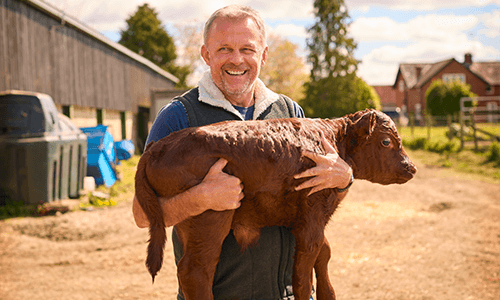
Q: Tell us About your Background and What Led you to Specialise in Knee Surgery?
A: I’m a Trauma and Orthopaedic Consultant based in York. I trained mainly in Yorkshire, with time in Nottingham and Birmingham, and became a Consultant in early 2023. My focus is hip and knee replacements, revision surgery, and joint infections. I grew up on a tenant farm in West Yorkshire – 350 acres of arable land. That’s where I developed a strong work ethic and an interest in engineering. Orthopaedics blends mechanics and medicine, so it felt like a natural path.
Q: What Types of Knee Injuries do you Commonly See in People with Physically Demanding Jobs Like Farming?
A: Most problems fall somewhere along the degenerative spectrum – meniscal tears, early cartilage wear, and eventually severe osteoarthritis. Knee osteoarthritis can come from many factors – genetics, ageing, injury history, weight, diabetes – but in farming, it’s often about repetitive strain.
Farmers average over 14,000 steps a day, compared to the general public’s 6,000. That’s more than double. Like hours on a tractor, the more wear, the more likely something breaks down.
Q: Are There Certain Farming Tasks or Equipment That Increase the Risk?
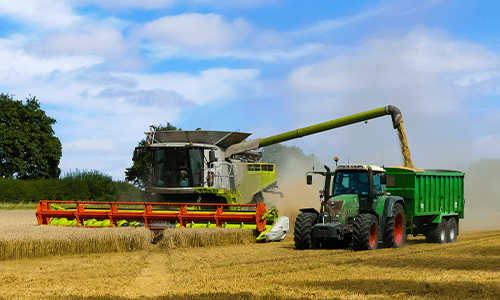
A: Definitely. Prolonged kneeling, squatting, lifting, awkward twisting – they’re all common on a farm. Even machinery has risks. Jumping down from tractor cabs puts sudden strain on knees. Older tractors, with vibration and heavy clutches, contributed to joint problems. Livestock handling is another one – animals can cause direct impact injuries, especially to knees and lower legs.
Q: What are Some Signs that Knee Pain Might be More than General Wear and Tear?
A: Watch for:
- Ongoing swelling or pain
- One-sided knee pain
- Clicking, locking, or giving way
- Pain on uneven ground or twisting
- Pain disturbing sleep
Minor injuries often improve in 2–3 weeks and fully recover in 6–8. If not, or symptoms worsen, speak to your specialist about requesting imaging.
Q: When Should Someone See a Specialist Instead of Just Resting it?
A: If after a few weeks of rest, icing, and pain relief you’re still struggling – especially if it’s affecting your work or mobility – get it looked at. Leaving osteoarthritis too long can make it harder to treat. Stiffness and bone changes develop over time and can complicate surgery outcomes.
Q: Is Surgery Always Necessary?
A: Not always – especially for active jobs like farming. We usually start with physio or steroid injections to manage pain and keep you moving. If needed, keyhole surgery can fix mechanical problems. For severe arthritis, a partial or full knee replacement might be best – resulting in a long-term improvement in pain, discomfort and improved function.
Q: How Long does Recovery Take After Surgery for Someone in a Physical Job?
A: Most people can return to work by three months, whether partial or full knee replacement. The implant is solid – it’s the soft tissue healing that takes time. Rushing recovery can lead to setbacks. I often find myself reminding farmers to take it slow – easier said than done!
Q: Do you Have a Success Story from Someone in the Farming Community?
A: Loads – but one stands out. A farmer in his late sixties came to see me with a 15-year-old knee replacement that had served him well. After a jump from a tractor, he noticed discomfort and – true to form – just cracked on with farming. By the time we met, the implant had loosened, and the knee was so angulated I joked he’d struggle to stop a “pig in a passageway.” He’d planned to retire, but we performed a revision knee replacement, corrected the angulation, and his pain completely resolved. At his 12-month review, he sheepishly admitted he’d been back farming for 9 of those months.
Q: What Advice Would you Give to Farmers Who’ve Been “Putting up With” Knee Pain?A: Please don’t wait. I get it – livestock doesn’t take days off, and there’s always more to do – but the longer you delay, the harder it can be to recover fully. Ongoing arthritis can lead to joint stiffness and even bone loss, which makes surgery trickier and post-op outcomes less predictable. Replacement can still help, but stiffness from years of delay doesn’t always reverse fully. Even if you’re not ready for surgery, get it assessed and request imaging. Knowledge is power – you’ll know what you’re dealing with and can make informed decisions when the time is right.
At Clifton Park Hospital, Mr Lodge and the team are helping Yorkshire’s farming community keep moving. We welcome self-pay, insured, and NHS e-referral patients. So, whether you’re nursing a long-standing injury or simply want to move without pain again, trust the team at Clifton Park to help you get back to doing what you love.
To book a consultation or find out more give us a call 01904 464550 or visit our website.
Located just outside York, Clifton Park Hospital is a modern, purpose-built facility delivering fast, high-quality care since 2006. Part of Ramsay Health Care UK, the hospital offers NHS, insured, and self-pay patients a calm, clean environment with 24 beds, three theatres, a day case unit, and on-site physiotherapy with a recovery gym. An expansion in 2018 added advanced MRI services and more outpatient space.
Clifton Park is proud to support Yorkshire’s farming and rural communities. With an understanding of the physical toll agricultural work takes on the body, especially the knees, the hospital is becoming a trusted provider for those working the land.