
Medically Reviewed By: Mr Mahbub Alam
Mr Mahbub Alam is a Consultant Orthopaedic Surgeon with a clinical interest in knee surgery and sport injuries.
View ProfileRamsay Health Care UK is a prominent leader in independent healthcare and was recently named Private Hospital Group of the Year at the 2026 Health Investor Awards. The Ramsay Group uses multiple cutting-edge robotic systems across its hospitals nationally, to deliver high precision, personalised joint replacements.
We are recognised as an NJR Gold Quality Data Provider, which means our hospitals consistently submit complete and accurate joint replacement data to the National Joint Registry. This reflects our strong commitment to transparency, clinical quality and continuous improvement in joint replacement outcomes.
Robotic systems act as precision tools that help surgeons plan and perform joint replacement with greater accuracy. They do not operate independently, and your consultant orthopaedic surgeon remains fully in control at every stage, with the robot providing enhanced visualisation, planning and guidance.
This page explains what robotic assisted orthopaedic surgery is, the robotic systems used at Ramsay, the evidence behind them, who may be suitable, and how to access treatment.
Robotic surgery for orthopaedic conditions combines 3D digital planning with a robotic arm or smart handheld tool, controlled entirely by an experienced orthopaedic surgeon who has been trained to use this advanced technology. Many patients ask, “what is robotic surgery?”, and in joint replacement it simply means adding digital precision to the surgeon’s existing expertise. The system helps the surgeon prepare bone and position implants with a level of precision that is difficult to achieve using manual instruments alone.
Unlike the idea of a “self-operating robot”, these systems do not make decisions or perform surgery autonomously. They act as high-accuracy instruments, responding only to the surgeon’s movements and providing real-time feedback, a key advantage in robotic knee replacement surgery.
Compared with traditional joint replacement, which relies solely on manual tools and the surgeon’s visual judgement, robotic systems add a digital layer of pre-operative planning, intraoperative mapping, and live guidance to support more consistent implant placement.
Two main technology types are used at Ramsay:
Image-based systems, such as ROSA® and Mako SmartRobotics™ which use a pre-operative CT or MRI scan to create a 3D model of the joint
Imageless systems, such as the CORI® Surgical System which builds the 3D model during surgery using optical or sensor-based mapping
Both approaches are consultant-led and used across Ramsay hospitals.
Ramsay is one of the few independent providers in the UK with real-world experience with multiple robotic platforms across multiple hospitals, offering patients access to the most appropriate system for their needs. This breadth of expertise is a key differentiator in the robotic surgery UK landscape.
What it is: A robotic‑arm assisted system designed for total knee replacement, using sensors and intraoperative data to create a detailed 3D model of your knee. Many patients refer to it simply as the ROSA robot.
How it works: ROSA® combines live soft‑tissue feedback, precise bone measurements, and a robotic arm that helps your surgeon position the implant accurately. The system allows your surgeon to assess knee balance with the implant in place before finalising the procedure.
Key benefit: Supports highly accurate implant placement with the ability to make final precise adjustments during surgery.
Available at: Clifton Park Hospital, The Cherwell Hospital and Woodland Hospital.
Find out more about the ROSA system at Ramsay
What it is: A handheld robotic-assisted system used for total and partial knee replacement. The Cori robot does not use a fixed robotic arm. Instead, it is a compact, portable system designed to support highly precise bone preparation. CORI is imageless and it gathers your knee’s anatomical data during the operation meaning no pre-operative CT scan is required.
How it works: Your surgeon uses a smart handheld burr guided by real-time optical navigation. The system creates a real-time 3D model of your knee during surgery and sets virtual boundaries to support precise bone preparation while protecting surrounding soft tissues.
Key benefit: No radiation from pre-op imaging, fast setup, and highly accurate bone preparation with built-in soft tissue protection.
Milestone: West Midlands Hospital recently celebrated 100 successful CORI procedures, led by Professor Edward Davis, who has performed computer-assisted joint replacement surgery at the hospital for over 18 years.
Available at: Fitzwilliam Hospital, Oaks Hospital and West Midlands Hospital.
Find out more about the CORI system at Ramsay
What it is: A CT-based robotic-arm system used for partial knee, total knee, and total hip replacement.
How it works: Mako uses a pre-operative CT scan to build a 3D model of the joint. During surgery, the robotic arm provides haptic boundaries which is a virtual “fence” that helps your surgeon stay within the planned area while preparing bone.
Key benefit: Highly controlled bone preparation with tactile feedback and precise implant positioning.
Available at: Rowley Hall Hospital, Tees Valley Hospital, Winfield Hospital.
Find out more about the Mako 4 system at Ramsay
What it is: Advanced technology used by orthopaedic surgeons to support highly accurate and personalised knee replacement surgery.
How it works: The VELYS™ system uses an infrared camera and optical trackers to gather real-time information about your knee during your surgery. This helps your surgeon plan and perform your knee replacement with a high degree of accuracy.
Key benefit: The VELYS™ Robotic-Assisted Solution supports a more accurate and personalised knee replacement by using real-time data to guide implant positioning. This approach is designed to improve stability, reduce pain and help the knee feel more natural during movement.
Available at: Ashtead Hospital, Euxton Hall Hospital, Rivers Hospital.
Find out more about the Velys system at Ramsay
Evidence from peer reviewed studies, national orthopaedic guidance and manufacturer supported clinical data suggests several potential benefits of robotic assisted joint replacement. The evidence base is still evolving and results vary between individuals, so these benefits should be understood as trends rather than guarantees.
Greater implant precision
Robotic systems support more accurate bone preparation and implant positioning than manual instruments. Improved alignment reduces the risk of malposition, which is a known contributor to pain, stiffness and early implant failure.
Personalised surgical planning
Robotic platforms use either pre-operative scans or intraoperative mapping to create a 3D model of your joint. This allows your surgeon to tailor the procedure to each patient’s unique anatomy rather than relying on standardised cutting guides.
Soft tissue protection
More precise removal of damaged bone while protecting healthy tissue - The technology guides your surgeon to remove only what’s necessary and stay within the planned boundary.
Reduced post-operative pain
Several studies report lower pain scores and reduced use of pain relief medication in the early days after robotic-assisted knee replacement. This is thought to be linked to more accurate bone cuts and less soft tissue disruption. However, this will vary in patients and the degree of arthritis / affected bone pre-operatively.
Shorter hospital stays
Evidence suggests that patients undergoing robotic-assisted knee replacement may be discharged sooner than those having conventional surgery. This reflects smoother early recovery and improved mobility in the first few days. However, the length of stay for all joint replacement surgery has decreased in recent years, as we aim for patients to start moving as soon as possible.
Faster functional recovery
Some studies show that patients may regain knee function more quickly, require fewer physiotherapy sessions and achieve better early range of motion. These findings relate to improved implant alignment and reduced soft tissue trauma.
These benefits are particularly relevant if you are considering robotic knee replacement surgery, where precision and soft-tissue protection are especially important.
No. Your consultant orthopaedic surgeon is in control at every stage of your operation. The robotic system cannot act independently, cannot make clinical decisions and cannot move without the surgeon guiding it. The surgery is robotic assisted, the surgeon leads the procedure with additional information shared by the robot based on that individuals anatomy.
Robotic technology is simply a precision tool. It helps your surgeon plan the procedure in detail and provides real time guidance during surgery, but it does not replace the surgeon’s skill or judgement.
Your surgeon sets the surgical plan, positions the instruments and performs every part of the operation. The robot supports this by giving accurate measurements and creating virtual boundaries that help your surgeon stay within the planned area.
A helpful way to think about it is that robotic assistance works like GPS for a skilled driver. The GPS provides guidance and helps you stay on the best route, but the driver remains fully in control of the car and can still select an alternative route and will still receive guidance.
If anything unexpected arises during surgery, your surgeon can override or stop using the robotic system at any time.
Robotic and computer-navigated technology is used across a growing number of orthopaedic procedures at Ramsay hospitals.
Total knee replacement (TKR)
Robotic systems such as ROSA®, Mako SmartRobotics™ and CORI® can support highly accurate bone preparation and implant positioning for total knee replacement.
Partial (unicompartmental) knee replacement
Robotic assistance is commonly used for unicompartmental knee replacement, where precision is especially important due to the smaller area being resurfaced using the CORI® or Mako SmartRobotics system.
Hip replacement
Some Ramsay hospitals offer navigation-assisted hip replacement, including CORI® and Mako SmartRobotics hip navigation at selected sites.
Aquablation therapy
A robotic-assisted, image-guided treatment for benign prostatic hyperplasia (BPH). Aquablation uses real-time ultrasound guidance and a robotic waterjet system to remove prostate tissue with precision.
If a patient requires a hip or knee replacement they can ask their consultant whether or not they would be suitable for robotic assisted surgery. Your consultant will assess this at your initial appointment, considering your joint condition, overall health and personal goals for recovery.
Patients particularly well‑suited to robotic assistance
People with complex anatomy - robotic planning can help surgeons tailor the procedure when the joint shape varies from the norm.
Active patients - those who want to return to work, sport or daily activities sooner may benefit from the precision and early‑recovery trends seen in robotic surgery.
Patients with previous surgery on the joint - digital mapping helps your surgeon plan around existing implants or altered anatomy.
People seeking a more personalised approach - robotic systems allow your surgeon to tailor implant positioning to your unique anatomy.
Patients who may not be suitable
Certain neuromuscular conditions - these can affect joint stability or movement patterns, so your consultant will advise carefully.
Some patients with severe obesity - in some cases, body habitus can limit the accuracy of tracking systems.
Suitability is always assessed case by case. Your consultant will explain whether robotic surgery is appropriate for your joint, your health and your goals.
The best way to find out
The most reliable way to understand whether robotic surgery is right for you is to book a consultation with a Ramsay orthopaedic consultant. They will review your symptoms, imaging and medical history, and recommend the safest and most effective treatment option.
Choosing where to have joint replacement surgery is an important decision, and Ramsay offers a combination of national reach, clinical expertise and independently verified quality that sets it apart.
NJR Gold Quality Data Provider - Ramsay is recognised as a National Joint Registry Gold Quality Data Provider across 25 hospitals. This independent benchmark reflects exceptional data accuracy, outcomes transparency and a strong commitment to clinical quality. It is one of Ramsay’s strongest and most verifiable indicators of excellence.
Experienced consultant surgeons - robotic procedures are performed by consultant orthopaedic surgeons with extensive experience in computer-assisted joint replacement. This includes Professor Edward Davis at West Midlands Hospital, who has more than 18 years of experience in surgery supported by technology, Mr Mahbub Alam at Oaks Hospital who has been involved in Robotic Surgery & Research for approximately 20 years, Mr Tim Parrott, also at Oaks Hospital, who is the Clinical Director of Knee Surgery at ESEOC.
National scale, local access - robotic and navigation-assisted surgery is available across multiple Ramsay hospitals in England, giving patients access to advanced technology close to home rather than at a single specialist centre.
Leading robotic systems - Ramsay offers ROSA®, CORI® and Mako SmartRobotics™ platforms.
No waiting lists - private patients typically access consultations, diagnostics and surgery significantly faster than on the NHS, helping reduce pain, improve mobility and support earlier return to daily life.
Self-pay and insurance options - patients can choose self-pay packages or use private medical insurance.
Accessing robotic-assisted joint replacement at Ramsay is straightforward, and you do not need private medical insurance to begin the process.
Step 1: Contact Ramsay
Call, enquire online or book directly. Self-pay patients do not need a GP referral, although a referral can be helpful if you already have one.
Step 2: Initial consultation
Meet with a Ramsay orthopaedic consultant for a full assessment. This may include X-rays or MRI, and a discussion of all suitable treatment options, including robotic-assisted techniques.
Step 3: Personalised treatment plan and fixed-price quote
Your consultant will confirm whether robotic surgery is an option for your joint and outline a tailored treatment plan. You will receive a clear, fixed-price quote detailing what is included.
Step 4: Surgery and recovery
Your procedure takes place at a Ramsay hospital offering robotic assistance, followed by a structured recovery plan and dedicated follow-up appointments.
Ready to take the next step?
Call 0808 223 0500, Book Online or Send an Enquiry
Robotic-assisted surgery uses advanced digital tools to help your consultant plan and perform joint replacement with greater precision. Your surgeon stays fully in control with the robotic system providing 3D planning, real-time guidance and accuracy that supports more personalised implant positioning.
No. Your consultant orthopaedic surgeon performs every part of your operation. The robot cannot act independently or make decisions. It works like GPS for a skilled driver in that it provides guidance and precision boundaries, but your surgeon remains in complete control and can override the system at any time.
ROSA® and CORI® are two leading robotic-assisted systems used at Ramsay. Both support highly accurate robotic knee replacement, but they work differently. ROSA® uses pre-operative imaging and real-time sensors, while CORI® is imageless and maps your knee during surgery. Your surgeon will recommend the system best suited to your anatomy and procedure.
Whilst most patient requiring a knee replacement, your consultants will be in the best position with imaging results to confirm whether this is an option for you . Robotic assistance is particularly helpful for patients may be younger and more active. Some patients, including those with certain neuromuscular conditions or severe obesity, may not be suitable. Your consultant will advise at consultation.
Contact Ramsay directly (a GP referral is not always required for self-pay, it is consultant preference), attend an initial consultation, receive a personalised treatment plan and fixed-price quote, and proceed to surgery with a structured recovery plan.
Mr Mahbub Alam is a Consultant Orthopaedic Surgeon with a clinical interest in knee surgery and sport injuries.
View Profile
Mr Shafic Al-Nammari
Orthopaedics
Mr Shafic Al-Nammari, Oaks Hospital, Colchester, treats all adult musculoskeletal conditions affecting the Foot & Ankle
View Profile

Mr Mahbub Alam
Orthopaedics
Mr Mahbub Alam is a Consultant Orthopaedic Surgeon with a clinical interest in knee surgery and sport injuries
View Profile

Mr Shaishav Bhagat
Orthopaedics
Mr Shaishav Bhagat is a Consultant Spinal Surgeon in Essex providing care for a full range of Spinal conditions including degenerative disorders, trauma, tumours, infections, deformities and sports related injuries
View Profile

Mr Mark Blackman
Orthopaedics
Consultant Mr Mark Blackman specialises in spinal surgery in Essex
View Profile

Mr Matthew Hynes
Orthopaedics
Mr Matthew Hynes is a Consultant Orthopaedic Surgeon, treats shoulder pain due to sports injuries, dislocations, impingement, rotator cuff tears, frozen shoulders, acromioclavicular joint pain, instability or arthritis.
View Profile

Mr Samirul Imam
Orthopaedics
Mr Samirul Imam is a Consultant Orthopaedic Surgeon in Essex, specialising in Wrist, Elbow and Shoulder Surgery
View Profile

Mr Alain Iserin
Orthopaedics
Mr Alain Iserin is a Consultant Orthopaedic Surgeon in Essex and Oxfordshire who specialises in shoulder surgery
View Profile

Mr Mark Loeffler
Orthopaedics
Mr Mark Loeffler is a Consultant Orthopaedic Surgeon specialising in hip and knee arthroplasty and soft tissue and arthroscopic knee surgery at Oaks Hospital, Colchester, Essex
View Profile

Mr D'jon Lopez
Orthopaedics
Mr D'jon Lopez is a Consultant Orthopaedic Trauma Surgeon in Essex, specialising in Hip and Knee Surgery
View Profile

Mr Edward Massa
Orthopaedics
Mr Edward Massa is a Consultant Orthopaedic Surgeon in Essex, specialising in hip and knee pathologies.
View Profile

Mr William Matthews
Orthopaedics
Mr William Matthews is a Consultant Orthopaedic Surgeon in Colchester, specialising in hand and wrist surgery.
View Profile
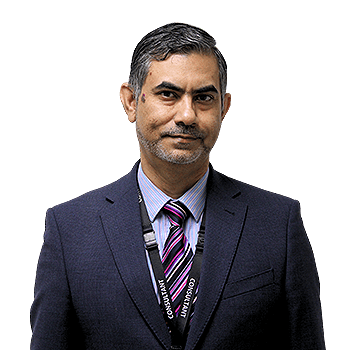
Mr Gohar Naqvi
Orthopaedics
Mr Gohar Naqvi is a Consultant Trauma and Orthopaedic Surgeon in Essex, specialising in hip and knee surgery
View Profile

Mr Tim Parratt
Orthopaedics
Mr Tim Parratt is a Consultant Orthopaedic Surgeon in Colchester who specialises in hip and knee surgery
View Profile

Mr Mark Prempeh
Orthopaedics
Mr Mark Prempeh is a Consultant Orthopaedic Spinal Surgeon in Essex, Chelmsford, Colchester and Ipswich who specialises in Spinal surgery
View Profile
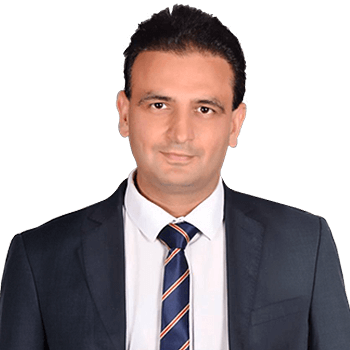
Mr Manav Raghuvanshi
Orthopaedics
Mr Manav Raghuvanshi is a Consultant Orthopaedic Surgeon in Essex specialising in hip and knee replacements
View Profile
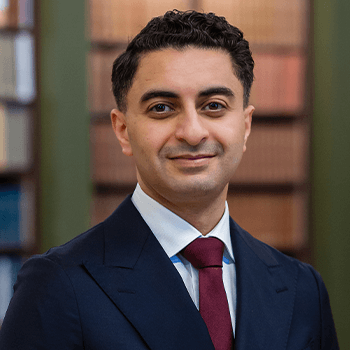
Mr Mustafa Rashid
Orthopaedics
Mr Mustafa Rashid is a Consultant Orthopaedic Surgeon in Essex, who specialises in Shoulder Surgery
View Profile

Mr Naveethan Sivanadarajah
Orthopaedics
Mr Naveethan Sivanadarajah is a Consultant Trauma & Orthopaedics Surgeon in Essex who specialises in Foot & Ankle Surgery
View Profile
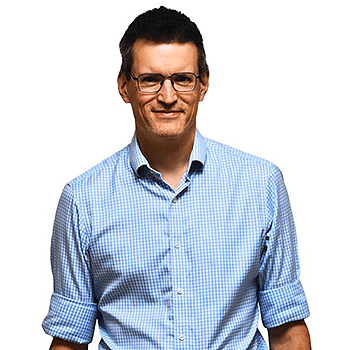
Mr Philip Sloper
Orthopaedics
Mr Philip Sloper is a Consultant Orthopaedic Surgeon specialising in hip and knee arthroplasty, knee arthroscopy and revision hip arthroplasty.
View Profile

Mr Jeremy Stanton
Orthopaedics
Mr Jeremy Stanton is a Consultant Orthopaedic Surgeon in Essex, Oaks Hospital.
View Profile

Mr Sivakolundu Suresh
Orthopaedics
Mr Sivakolundu Suresh is a Consultant Orthopaedic Surgeon in Essex, who specialises in Hip and Knee Surgery
View Profile

Mr Abdul Waheed
Orthopaedics
Mr Abdul Waheed is a Consultant Orthopaedic Surgeon in Essex, who specialises in hip and knee surgery
View Profile

Mr Nicholas Wardle
Orthopaedics
Mr Nicholas Wardle is a Consultant Orthopaedic Surgeon in Essex, Oaks Hospital specialising in hip and knee arthroplasty, hip arthroscopy and periprosthetic hip fractures.
View Profile

Mr Timothy H D Williams
Orthopaedics
Mr Timothy Williams is a Consultant Orthopaedic Foot & Ankle Surgeon in Colchester, Essex, specialising in the treatment of foot and ankle conditions.
View Profile

Miss Georgina Wright
Orthopaedics
Miss Georgina Wright is a Consultant Orthopaedic Surgeon in Essex
View Profile

Spread the cost over a term you choose, with fixed monthly payments that fit your budget, so you’re always in control.
Find out more
Don't put your health on hold because of finances. We offer a range of ways to pay, so you can find what works for you and focus on getting better.
Find out more
Already covered? Let your insurance do the work. Our simple referral process means less paperwork and a faster path to treatment.
Find out more
Spread the cost over a term you choose, with fixed monthly payments that fit your budget, so you’re always in control.
Find out more
Don't put your health on hold because of finances. We offer a range of ways to pay, so you can find what works for you and focus on getting better.
Find out more
Already covered? Let your insurance do the work. Our simple referral process means less paperwork and a faster path to treatment.
Find out moreKnee replacement is knee surgery to repair worn arthritic knee joints or knee injuries using an artificial knee joint to help reduce pain and restore movement in your knee.
Learn about knee arthroscopy, what to expect, costs and recovery time. This surgery is delivered by our expert orthopaedic surgeons at hospitals across the UK
Anterior cruciate ligament (ACL) reconstruction is a surgical procedure designed to repair a torn or injured ACL, a crucial ligament in the knee. It involves using a graft of new tissue, typically a tendon, taken from another part of your knee to restore stability.

Cough, Breathlessness or Recurrent Chest Infections? Dr Hawkins, Consultant Respiratory Physician answers common questions patients ask and explains when to seek specialist advice.

Ramsay Health Care UK has achieved the highest Net Promoter Scores (NPS) among multi-site healthcare provider groups in the 2025 patient experience benchmarks, published by Cemplicity.

The information, including but not limited to, text, graphics, images and other material, contained on this website is for educational purposes only and not intended to be a substitute for medical advice, diagnosis or treatment. Always seek the advice of your physician or other qualified health care provider with any questions you may have regarding a medical condition or treatment.
No warranty or guarantee is made that the information contained on this website is complete or accurate in every respect. The testimonials, statements, and opinions presented on our website are applicable to the individuals depicted. Results will vary and may not be representative of the experience of others. Prior patient results are only provided as examples of what may be achievable. Individual results will vary and no guarantee is stated or implied by any photo use or any statement on this website.
Ramsay is a trusted provider of plastic or reconstructive surgery treatments as a part of our wrap-around holistic patient care. Our personal, friendly and professional team are here to support you throughout to ensure the best possible care. All procedures we perform are clinically justified.
*Acceptance is subject to status. Terms and conditions apply. Ramsay Health Care UK Operations Limited is authorised and regulated by the Financial Conduct authority under FRN 702886. Ramsay Healthcare UK Operations is acting as a credit broker to Chrysalis Finance Limited.
Ramsay Health Care UK is not currently recruiting for any roles based outside of England. If you are interested in applying for a role with Ramsay Health Care UK, please note that all available positions are advertised exclusively on our official website: https://www.ramsayhealth.co.uk/careers. Be cautious of individuals or organisations that approach you directly for remotely-based roles. Always verify the authenticity of the job offer and be careful with whom you share your personal information. For more information and advice on employment fraud, please visit: https://www.ramsayhealth.co.uk/careers/recruitment-fraud